

Reverse mortgage occupancy certification: what it asks
What the annual HECM occupancy certification confirms, the three ways servicers collect it, absences that matter, and a routing table for borrower calls.

In this article
A reverse mortgage occupancy certification is the yearly confirmation that the home is still the principal residence of each borrower and any Eligible Non-Borrowing Spouse (NBS). On a Home Equity Conversion Mortgage (HECM), the Department of Housing and Urban Development (HUD) requires the loan servicer to collect it every year. The answer matters because occupancy is one of the conditions that keeps the loan from becoming due and payable.
Loan officers, processors and customer-facing staff usually hear about it when a borrower calls holding "the occupancy letter." This guide explains what the certification confirms, the three ways a servicer can collect it, which absences change the answer, and where to route the questions you'll get. It doesn't replace the servicer's instructions or advice about any one borrower's situation.
What the annual occupancy certification confirms
HUD set the current standard in Mortgagee Letter 2023-23, section III.B.1.p of the servicing chapter of HUD Handbook 4000.1. The mortgagee must get an annual certification, from the borrower and any Eligible NBS, that the property is still their principal residence.
The certification is narrow. It doesn't re-underwrite the loan or ask about the loan balance. It asks one thing: does each person still live here as their main home?

- Who certifies. Each borrower, plus any Eligible NBS.
- What they confirm. The HECM property is still their principal residence.
- Extra step for an Eligible NBS. Borrowers who identified an Eligible NBS at origination also certify each year that the spouse still meets the qualifying attributes.
- Older loans. For HECMs with Federal Housing Administration (FHA) case numbers assigned before August 4, 2014, the servicer sends questions with the certification to try to identify any non-borrowing spouse.
"Principal residence" has a regulatory definition in 24 CFR 206.3: the dwelling where the borrower (and any NBS) keeps a permanent place of abode and typically spends the majority of the calendar year. A person can have only one principal residence at a time. See the reverse mortgage glossary for related terms.
Three ways the servicer can collect it
Since Mortgagee Letter 2023-23, the servicer may obtain the certification in hard copy, electronically, or verbally. The verbal option took effect immediately when the letter was issued on November 30, 2023. Each method carries its own requirements.
| Method | What HUD's standard requires | What the borrower sees |
|---|---|---|
| Hard copy | A signed certification with HUD's perjury and false-statement warning above the signature line | A mailed letter or form to sign and return |
| Electronic | The same certification and warning, completed electronically | An online form or e-signature request |
| Verbal | The servicer reads the required warning first and gets a spoken "yes." The employee signs and dates the verification, notes each person's name and phone number, and keeps an audio recording available to FHA on request. | A phone call from the servicer |
The servicer keeps copies of every annual certification, and any documentation of absences, in the servicing file. A borrower who gets an unexpected call asking them to certify can reasonably confirm it first. The safest route is to call the servicer back at the number printed on their account statement.
Absences that change the answer
Most borrower questions are about time away from the home: a long visit with family, a seasonal stay, or a hospital or rehab stay. Three federal rules shape the answer, and the servicer applies them to the specific file.

- Absences over two months. HUD's standard says the servicer must advise borrowers to report absences of more than two months. Reporting helps avoid a finding that the principal residence has changed.
- Health care stays. Under 24 CFR 206.3, the home still counts as the principal residence of a borrower temporarily in a health care institution, as long as the stay doesn't exceed twelve consecutive months.
- Illness beyond 12 consecutive months. Under 24 CFR 206.27(c), the loan can become due and payable, with HUD approval, if no other borrower still lives in the home.
- Moving out for other reasons. The same section covers a home that stops being the principal residence for reasons other than death, again when no other borrower lives there.
An Eligible NBS who is temporarily in a health care institution keeps the home as their principal residence as long as the borrower spouse physically lives there. Different rules apply during a Deferral Period after the last borrower dies. Those are a servicing question, not something to resolve on an intake call.
A worked example: one certification year
This fictional file shows how one household's year plays out. Rosa is the only borrower. Her husband, Martin, is an Eligible NBS. Their servicer sends the annual certification each spring.
| When | What happens | Who owns the next step |
|---|---|---|
| March | The servicer mails the occupancy certification and the Eligible NBS certification. | Rosa completes both and returns them by the servicer's deadline. |
| April | Rosa calls her original loan officer. She plans to stay with her daughter for ten weeks after surgery. | The loan officer explains that the servicer handles occupancy and gives her the servicer's number. |
| April | Rosa tells the servicer about the absence, which is longer than two months, and returns the signed forms. | The servicer documents the absence in the servicing file. |
| November | Martin enters a rehab facility for three months. Rosa stays in the home. | A temporary health care stay doesn't change Martin's principal residence while Rosa lives there. The household confirms with the servicer how to report it. |
Notice what the loan officer did not do: decide whether the absence was acceptable. The servicer applies the rules to the file. The originator's job is to get the borrower to the right party quickly and keep a short note of the call.
A call note your team can reuse needs only a few fields:
- Date of the call and who called (borrower, NBS, or a family member).
- What prompted it: a letter, an email, or a phone request.
- Any absence described, with its start and expected end.
- The servicer contact you gave, and who on your team follows up.
Route the occupancy questions you'll get
Origination staff are rarely the servicer, but borrowers often call the person they know. A shared routing table keeps answers consistent and keeps staff from giving file-specific guidance they can't stand behind.
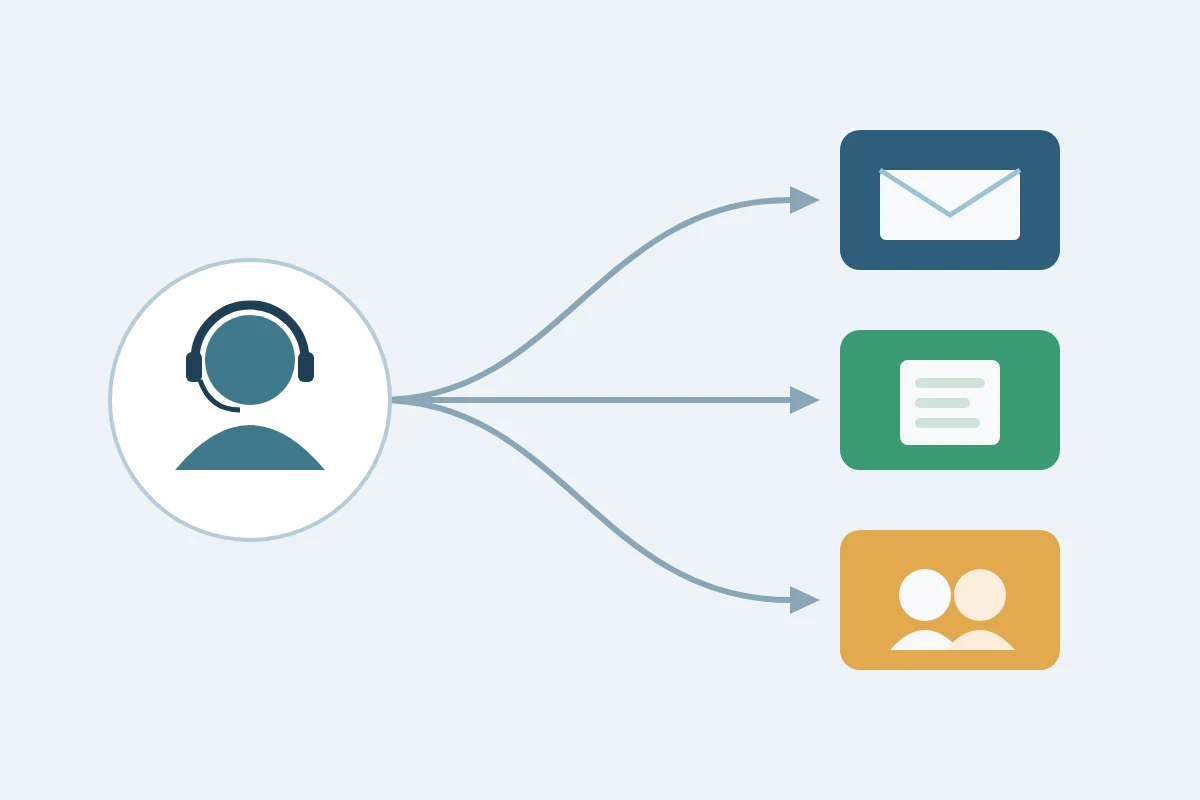
The table below covers the calls teams hear most. For the broader handoff after closing, see the reverse mortgage servicing handoff.
| The caller says | What it usually is | Route to |
|---|---|---|
| "I got a letter asking if I still live here." | The annual occupancy certification | The servicer named on the statement |
| "Someone called and asked me to say yes." | Possibly a verbal certification | The servicer, at the number on the statement |
| "I'll be away for three months." | An absence of more than two months | The borrower reports it to the servicer |
| "Mom is in a nursing facility." | A health care stay and the 12-month rule | The servicer; options questions to a HUD-approved counselor or attorney |
| "My wife isn't on the loan." | NBS identification or NBS certification | The servicer |
| "We divorced." | The servicer needs the final divorce decree | The servicer; legal questions to an attorney |
Unpaid taxes or insurance are a separate servicing issue that often comes up on the same call. The HECM property charges handoff explains how those obligations are set up at closing.
Key takeaways
- The servicer must collect an occupancy certification every year from each borrower and any Eligible NBS.
- It can be collected on paper, electronically, or by a recorded phone call with a required warning.
- Absences over two months should be reported; health care stays have a twelve-consecutive-month limit.
- Origination staff route occupancy questions to the servicer instead of judging the file.
For more servicing and handoff guides, browse the Intelligence Center, or see how ReversePilot handles post-closing handoffs.